
The National Copper Corporation of Chile (Codelco), the Ministry of Science, Technology, Knowledge, and Innovation, the Valparaíso Scientific and Technological Center of the Federico Santa María Technical University, the SAPHIR Millennium Institute, and Andrés Bello University signed a Memorandum of Understanding (MoU) with the aim of establishing a strategic collaboration for the development and application of very high-purity copper, reported the Ministry of Science.
The purpose of the Memorandum is to coordinate technical and scientific efforts to explore the production of oxygen-free copper (OF/OFE), i.e., copper with purity levels equal to or greater than 99.9995%, as well as to define a gradual path to address the complexity associated with the manufacture of parts and components made from this material.
The signatory institutions will make available their technical, scientific, and advanced manufacturing capabilities to jointly define the prototypes to be developed, the work schedules, and the financing models that will enable progress toward the proposed objectives, while safeguarding the proper management of any intellectual property that may be generated.
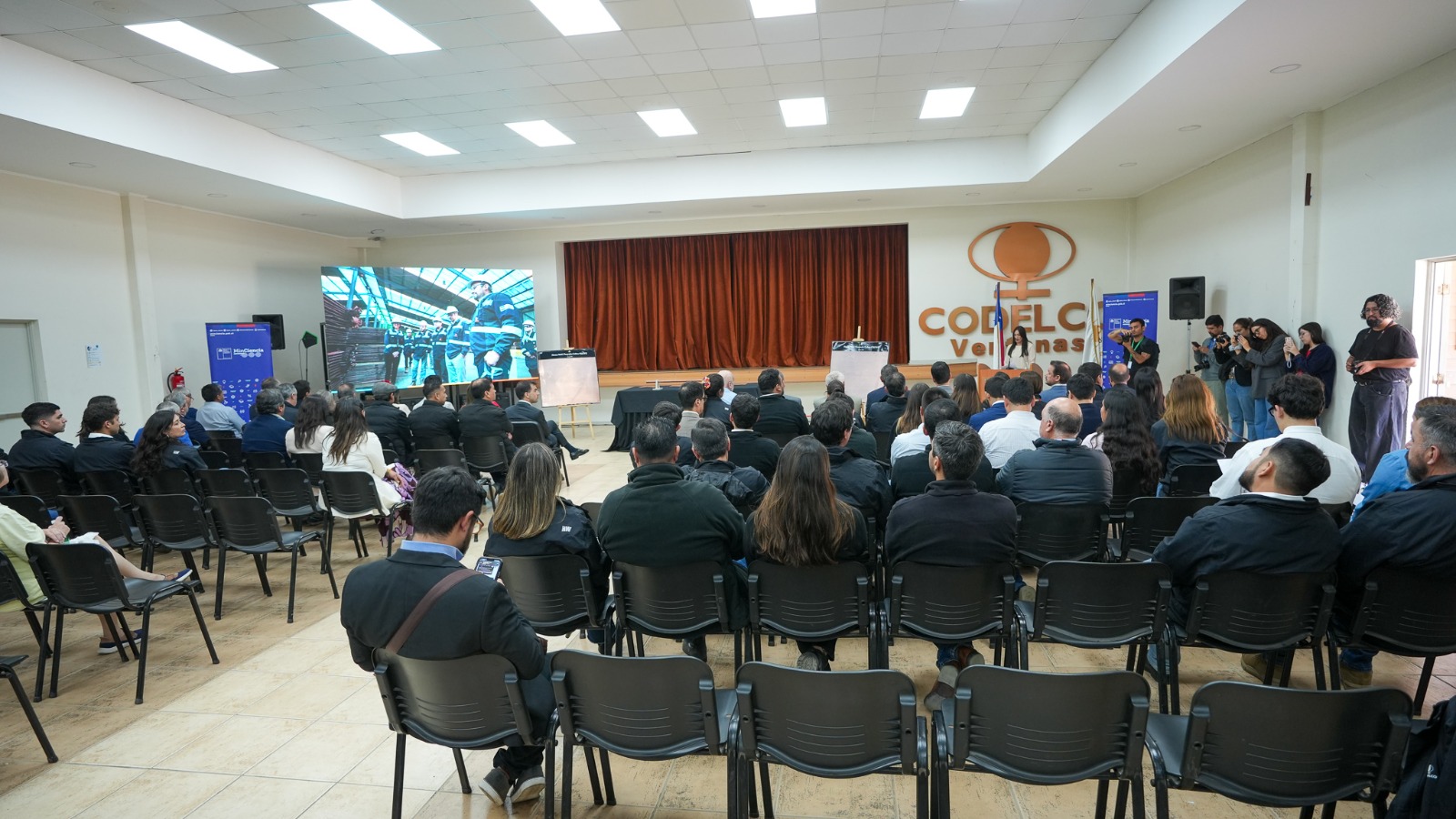 Codelco Ventanas, for its part, will explore technological alternatives for obtaining OF/OFE copper from grade A cathodes, in addition to participating in technical forums aimed at defining product specifications, quality standards, and certification requirements, considering potential applications in sectors such as energy, advanced electronics, and highly complex technological infrastructures.
"This memorandum is consistent with the quality of our cathodes and the strategic value of high-purity refined copper for the country. As the Ventanas Division, we proudly take on the challenge of contributing to the development of applied research and the exploration of new products," said Ricardo Weishaupt, general manager of Codelco Ventanas.
The high-purity copper that is being evaluated for production under this agreement would be destined for the European Organization for Nuclear Research (CERN), the world's leading particle physics research center. Chile's incorporation into this institution, which brings together more than 23 member states and dozens of partner organizations collaborating on cutting-edge experiments, is a strategic step toward promoting scientific innovation, strengthening technological development, and opening up new opportunities for the country to build advanced capabilities.
The Ministry of Science will play a coordinating role, promoting that the actions developed within the framework of this Memorandum remain aligned with national policies and strategies in science, emerging technologies, mining, and advanced manufacturing, in addition to coordinating the monitoring of the progress of the collaboration.
"We firmly believe that economic and social growth is built when science engages with the country's needs. That is why we are developing a roadmap here so that Chile not only participates in big science, but also transforms cutting-edge science into productive development, quality employment, and innovation with a real impact on people's lives. We see the link with CERN not as an end in itself, but as a tool to strengthen our development, bringing together the state, academia, and industry, with standards, evidence, and verifiable results," said Aldo Valle Acevedo, Minister of Science, Technology, Knowledge, and Innovation.
The participating academic and scientific institutions will contribute engineering, simulation, design, prototyping, metrology, and applied research capabilities, as well as the participation of students and professionals through theses, internships, and training activities related to the projects defined within this framework.
On this subject, Juan Yuz, rector of the Federico Santa María Technical University, said that "today this project to produce high-purity copper for applications with CERN is coming to fruition, but it also opens up a host of opportunities for national development and for us as a university. We are happy to contribute to this role, to this success story, and to highlight the capabilities that exist at the university and are also associated with the training of human capital, from the technical level to the doctorate level."
The Memorandum of Understanding shall remain in force for two years from the date of its entry into force. Specific initiatives and projects defined within the framework of this collaboration shall be agreed upon subsequently by the parties, in accordance with the objectives and guidelines established in the agreement.
This initiative represents a significant step forward in strengthening the country's technological capabilities, promoting the generation of added value to copper and the development of applied knowledge in areas of high scientific and industrial demand.
"This means that we are going to work very hard and with great energy to develop a process that will allow us, using the copper refined by the Ventanas Division, to produce this oxygen-free copper, which will open up market opportunities and uses for copper that are different from those it currently has," explained Felipe Lagno, Codelco's Corporate Manager of Innovation and Technology.