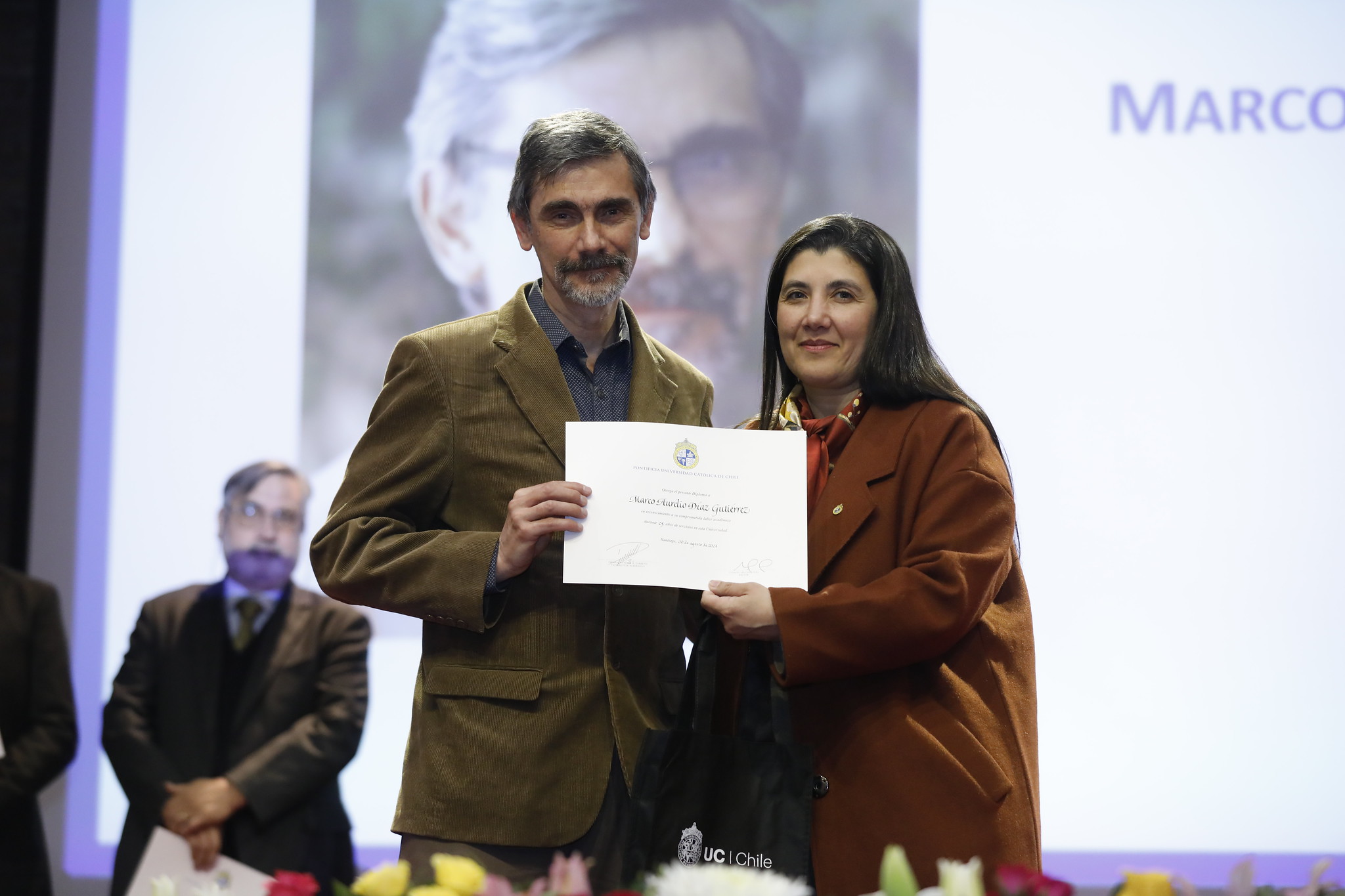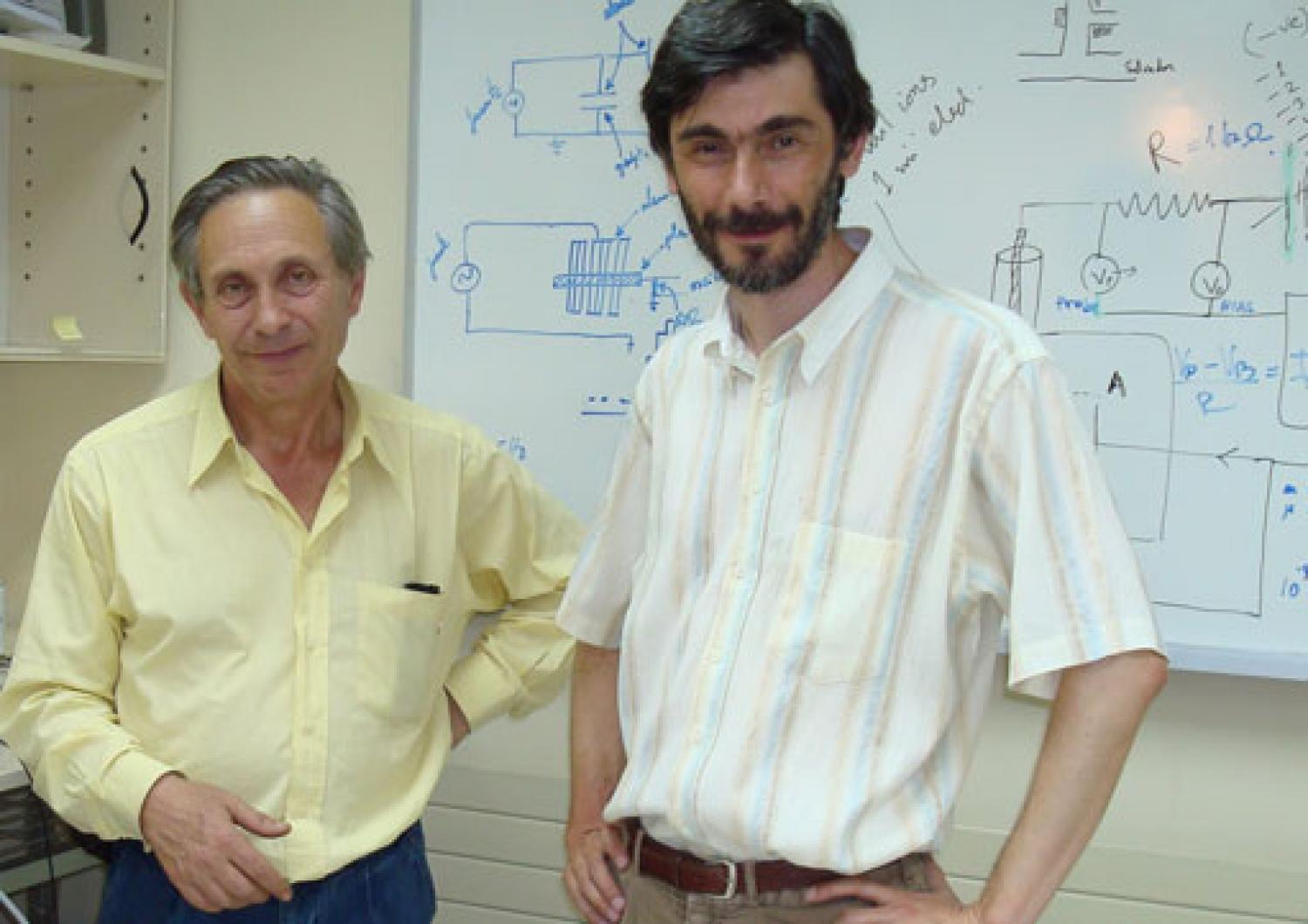
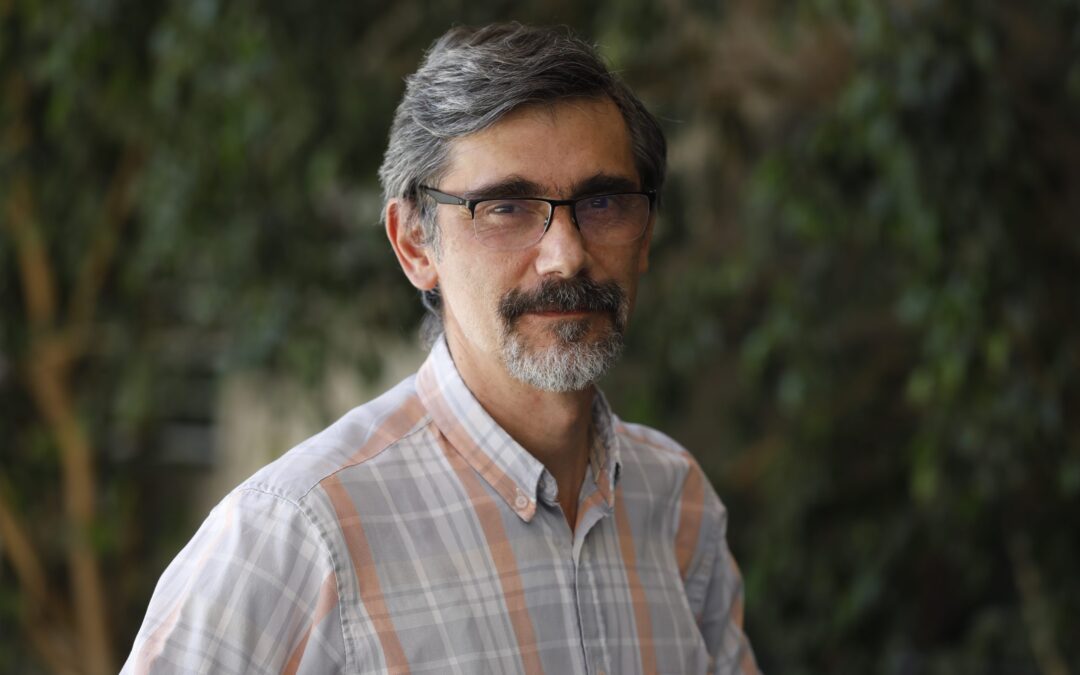
Professor Marco Aurelio Díaz, academic at the Institute of Physics of the Pontificia Universidad Católica de Chile and former associate researcher of the Millennium Institute SAPHIR, has played a key role in the consolidation of the links between Chile and CERN. After years of work in frontier particle physics, today he assumes the challenge of continuing to contribute as an honorary researcher of SAPHIR, a role that he recognizes as part of a collective process in which Chile has managed to position itself strongly in international research.
"In my years at SAPHIR I have seen how particle physics and its relationship with CERN have been growing. SAPHIR has contributed a lot to this growth, hand in hand with its director, Professor Sergey Kulechov", says Diaz, noting that this process has not been isolated, but accompanied by the work of researchers who guide new generations. "In the experimental area of Physics, the work of Professor Francisca Garay stands out, who guides her students in the analysis of ATLAS data and in the involvement in other experiments at CERN. In the area of Theoretical Physics I mention Professor Giovanna Cottin, who guides her students in the theoretical aspects of particle physics to be studied at CERN. The Chilean industry will face the challenge of taking advantage of all the opportunities that open up by collaborating with CERN", he adds.
Díaz's experience is also marked by having accompanied the first five-year cycle of SAPHIR, in which the Institute reached a stage of consolidation and expansion. "The first 5-year stage of the SAPHIR Millennium Institute has been one of consolidation of the work in the area of Particle Physics, and of initiating connections with other areas of science and engineering. Obviously the area of Particle Physics is directly related to SAPHIR. The Institute has been very concerned about the students, supporting their development through scholarships, internships and conferences", he says.
In his analysis, the scope of the work at SAPHIR goes beyond particle physics. "What is developed at CERN is not only related to particle physics, but also to medicine, biology, chemistry, geophysics, engineering and other areas. I also mention the role of industry. SAPHIR in its initial stage has enabled many opportunities for Chilean industry to cooperate with CERN, from field studies to the construction of high-tech parts. By taking advantage of these opportunities, knowledge is created that remains in Chile, which leads to its development".
Looking to the future, Diaz warns that the challenges are as great as they are promising. "The challenges that lie ahead for SAPHIR in the future are the continuation of the consolidation of particle physics in Chile and its relationship with CERN, the involvement of other sciences with CERN, its international projection and its relationship with industry. Steps have already been taken in these directions. Particle physics has grown in Santiago and in other regions of Chile. Students have been given the importance they deserve. The relationship with CERN experiments has increased. This progress must be consolidated, and at the same time involve more other sciences and industry. His move from associate researcher to honorary researcher at the Millennium Institute SAPHIR marks not only a change of role, but also a recognition of his career and the mark he has left on the Chilean scientific community. Marco Aurelio Díaz embodies the union between academic rigor, international collaboration and the training of new generations of scientists, always with the conviction that knowledge is a collective work.
Today, his legacy is projected as a guide for those who continue to build the bridge between Chile and CERN. His example reinforces the importance of combining scientific excellence, interdisciplinary openness and links with industry, thus consolidating a path that will allow the country to continue to occupy a prominent place in particle physics worldwide.