As part of efforts to strengthen Chile’s participation in major international scientific collaborations such as CERN, the SAPHIR Millennium Institute and the Federico Santa María Technical University (UTFSM) continue to build on their joint efforts to develop advanced human capital in particle physics.
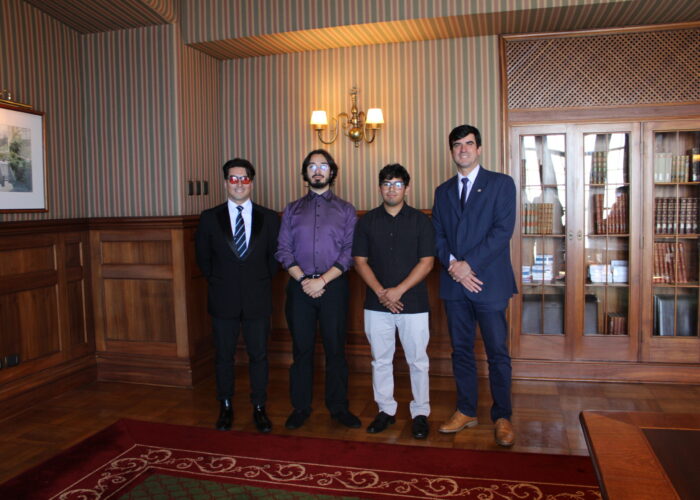
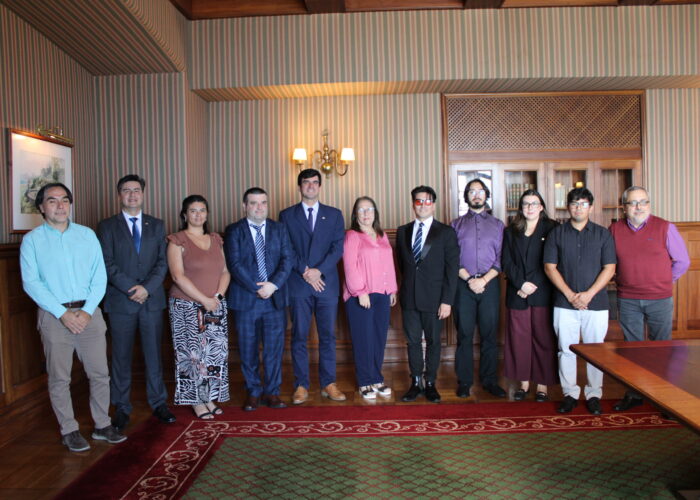
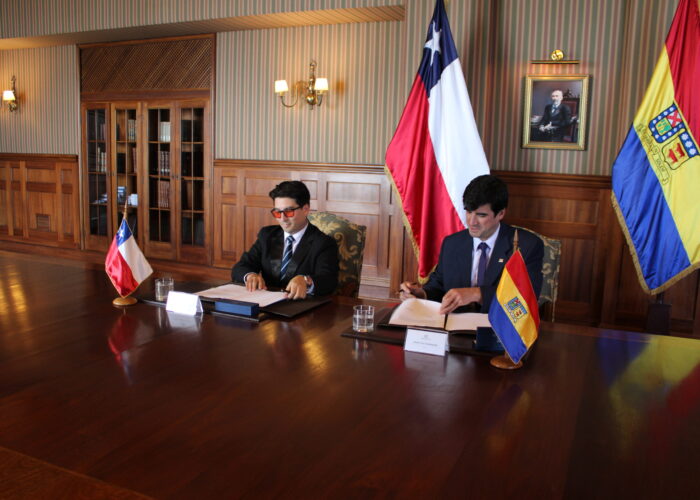
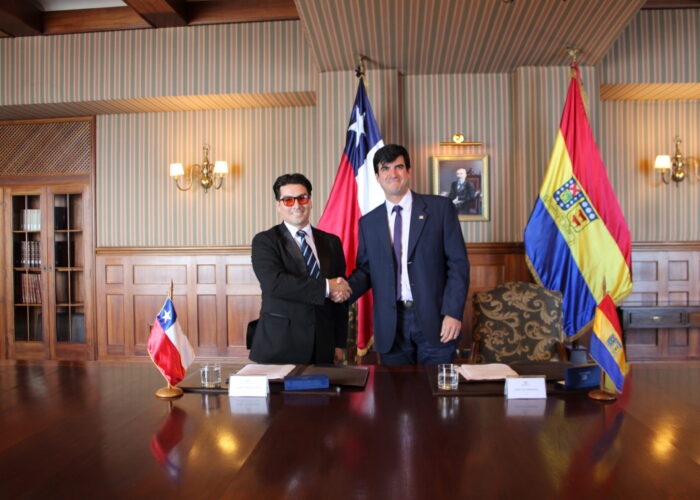
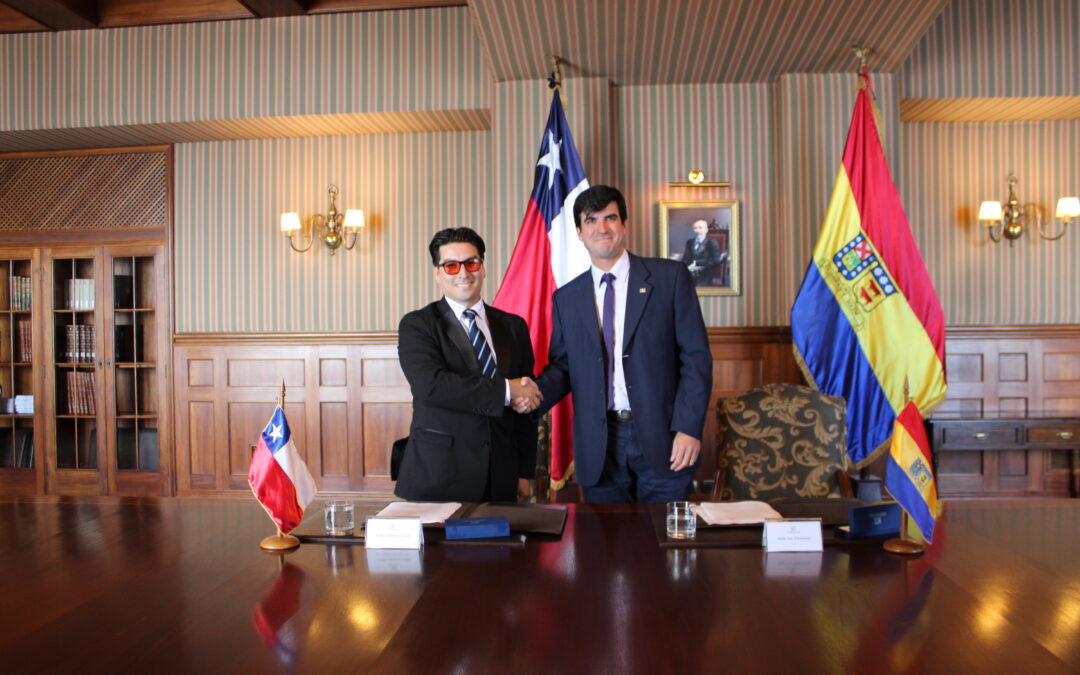
The agreement was signed on Monday, with SAPHIR Executive Director Felipe Olivares León and UTFSM Rector Juan Ignacio Yuz Eissmann in attendance. The agreement aims to enhance the training and mobility of specialized technicians, in line with the challenges posed by Chile’s participation in cutting-edge experiments such as ATLAS.
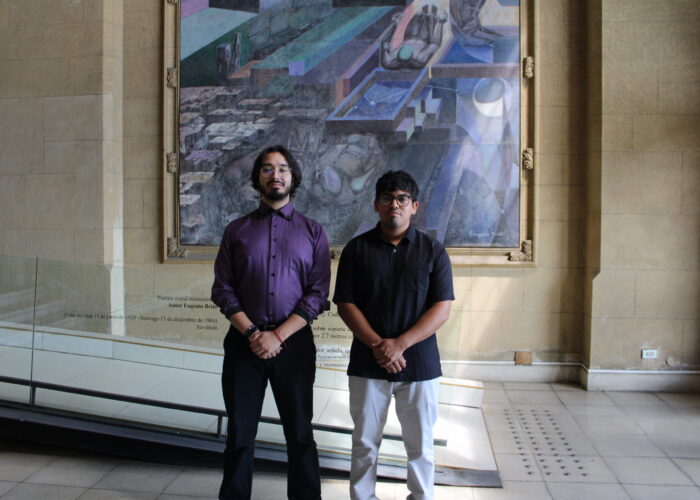
In this context, Felipe Olivares León notes that “the addition of Javier Meneses and José Caro to the collaborative efforts at ATLAS, as part of the Phase-II Upgrade, is very significant news, as both will work on the development and testing of modules for the Strip detector at the Rutherford Appleton Laboratory (RAL), reflecting a concrete contribution of Chilean technical expertise to one of the most important technological upgrade processes in particle physics worldwide.”
Furthermore, the executive director of SAPHIR emphasizes that “drawing on our experience at CERN and within the ATLAS collaboration, and through our ongoing work with the Federico Santa María Technical University to strengthen these ties, we have sought to create meaningful opportunities for training, specialization, and international exposure for students, technicians, and engineers.”
Along the same lines, Felipe Olivares León adds that “this experience is part of the vision behind ProTeGi, our program aimed at strengthening technical career paths linked to major international scientific experiments.”
Finally, the executive director of SAPHIR emphasizes that “milestones like this not only shape the individual careers of Javier and José, but also help strengthen the national ecosystem for particle physics, advanced instrumentation, and technological development.”
This initiative is part of the ProTeGi program (National Program for Training and Technical Mobility in Major International Experiments), promoted by SAPHIR, whose goal is to create a structured pathway for the training, specialization, and placement of technicians in high-level scientific environments, including CERN.
The collaboration with UTFSM is particularly significant given the university’s track record in experimental particle physics and its active involvement in technological developments related to international experiments. In this context, the role of Dr. Nicolás Viaux—a faculty member in the Department of Physics at UTFSM and a researcher with SAPHIR—stands out, as he has contributed both to the scientific development and to the coordination of this collaboration.
SAPHIR has emphasized the importance of involving not only scientists and engineers, but also highly qualified technicians, whose contributions are essential to the construction, operation, and maintenance of the complex technologies used in particle physics experiments.
This partnership reinforces the SAPHIR Millennium Institute’s commitment to developing the national scientific ecosystem and enhancing Chile’s international standing in the field of high-energy physics, paving the way for more robust and inclusive participation in major global scientific collaborations.